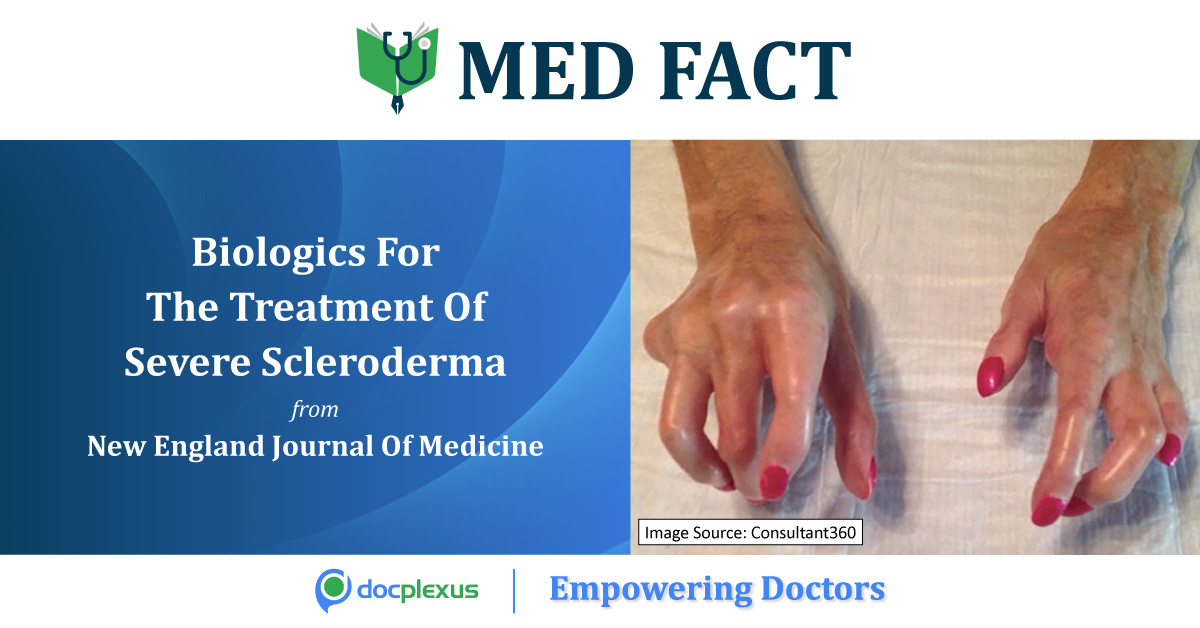
Synopsis Scleroderma is a devastating autoimmune disorder. Although disease-modifying antirheumatic drugs (DMARDs) and biologics have been studied, none have shown lasting benefit, and only cyclophosphamide given for 12 months has shown short-term benefit as compared with placebo. Therefore, the study aimed at exploring new frontiers of treatment for severe scleroderma in terms of the use of autologous stem-cell transplantation. This week's 'MED FACT' discusses a clinical trial from The New England Journal Of Medicine, “ Myeloablative Autologous Stem-Cell Transplantation for Severe Scleroderma ” , 2019. Authors : K.M.
Sullivan, E.A. Goldmuntz, L. Keyes ‑ Elstein, et al. Key Takeaways Myeloablative autologous hematopoietic stem-cell transplantation has long-term benefits in patients with scleroderma. Objective Study Type Participants To Investigate The Role Of Stem Cells In Treating…