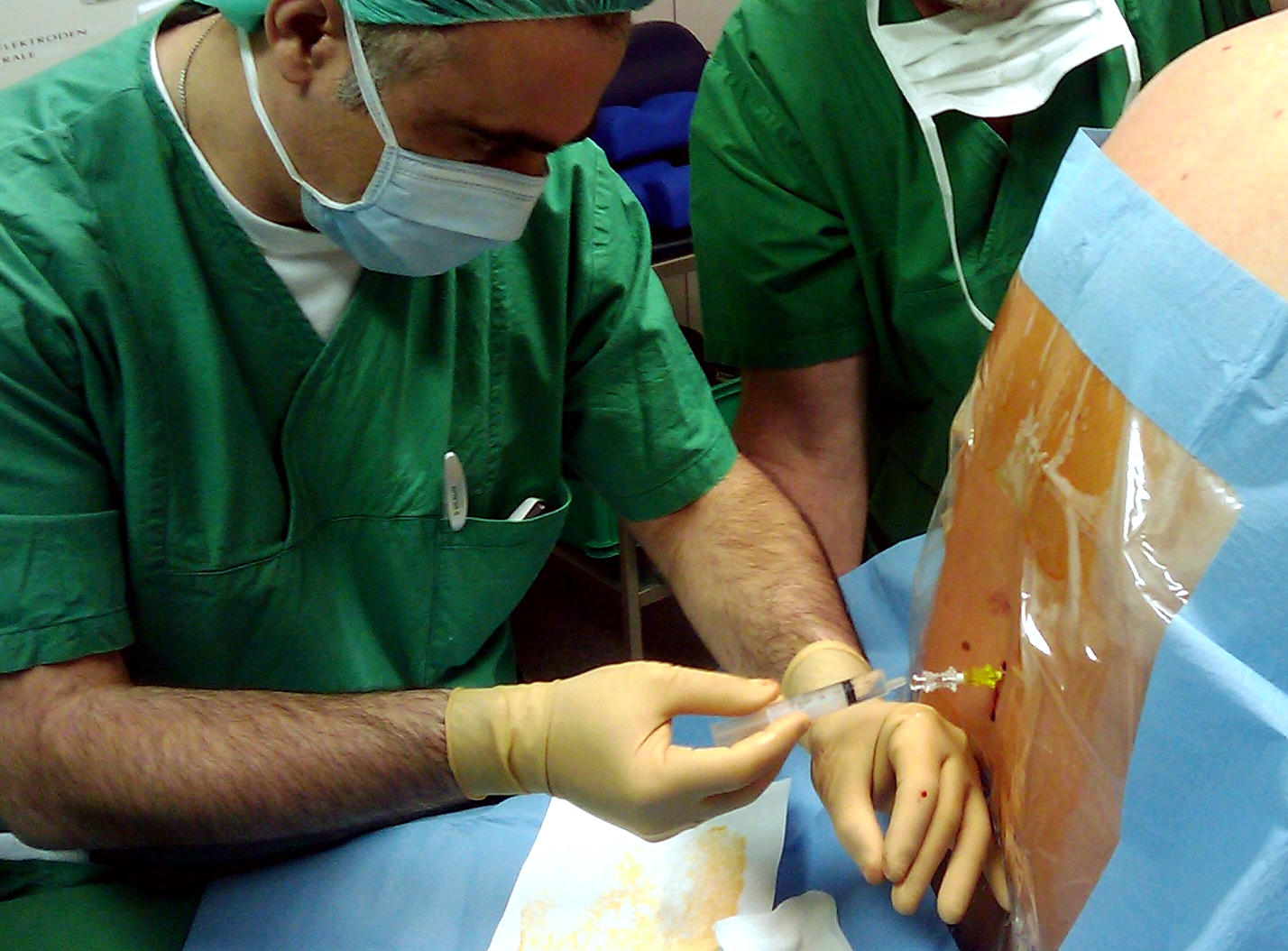
The ease of performance makes spinal anaesthesia a popular choice for a large number of surgical procedures. Though relatively safe, it is inherently associated with significant complications. The dictum ‘prepare for the worst, but expect the best’ holds true for an anaesthetist’s job. The myriad of complications that can occur due to anaesthesia creates tremendous pressure. The same applies even for spinal anaesthesia.
Several factors have to be considered even prior to the administration of the anesthesia. Raised intracranial pressure, clotting disorders, localised or systemic sepsis and deformed spine are contraindications for spinal anaesthesia. Systemic diseases, previous spinal surgery, immunosuppression and medications with drug interactions often need to be considered before a patient undergoes spinal anaesthesia. Various types of complications occur during spinal anaesthesia…