
Tardive dyskinesia (TD) is a geriatric hyperkinetic disorder that occurs as a delayed side-effect to antipsychotic treatment. Although the advent of second-generation antipsychotics (SGA) has reduced the risk of TD, studies have shown that TD can occur even with SGA administration. The etiology, management, and prevention of TD remain a challenge. It affects 20%-30% of patients in India who are on neuroleptics. Nomenclature Initially, TD referred only to the diagnosis of irreversible buccolingual masticatory dyskinesias.
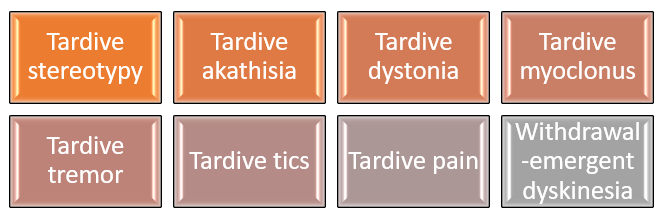
However, it has evolved to encompass all diagnostic symptoms that arise due to dopamine receptor blocking agents (DRBAs). The spectrum of conditions that come under TD is mentioned in Figure 1. Figure 1. The spectrum of Tardive dyskinesia (Source: Annals of Indian Psychiatry) Pathophysiology Figure 2. Causes of Tardive dyskinesia (Source: Annals of Indian…