
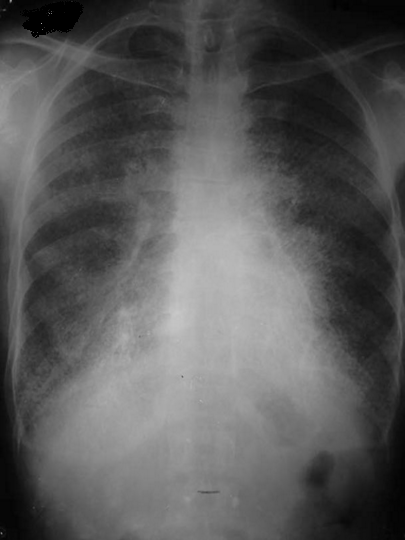
Pulmonary alveolar microlithiasis or Harbitz’ syndrome is a rare disease. The discovery of new biomarker associated with this disease holds the potential of development of new therapy. Pulmonary alveolar microlithiasis (PAM) or Harbitz’ syndrome is rare pulmonary disease characterized by the presence of diffuse innumerable minute calculi called microliths in the alveoli of the lungs. Though the disease is rare it presents vital physiological properties and genetic association making it important to study.
The disease is caused by a genetic mutation in a gene named SLC34A2, which results in the loss of cellular pump responsible for phosphate removal from the lung airspaces. In this disease lung histology shows intra-alveolar calcospherites and slight fibrosis of alveolar wall. Further, the lung shows exclusively calcified material in the form of amorphous powdery particles chemically…