
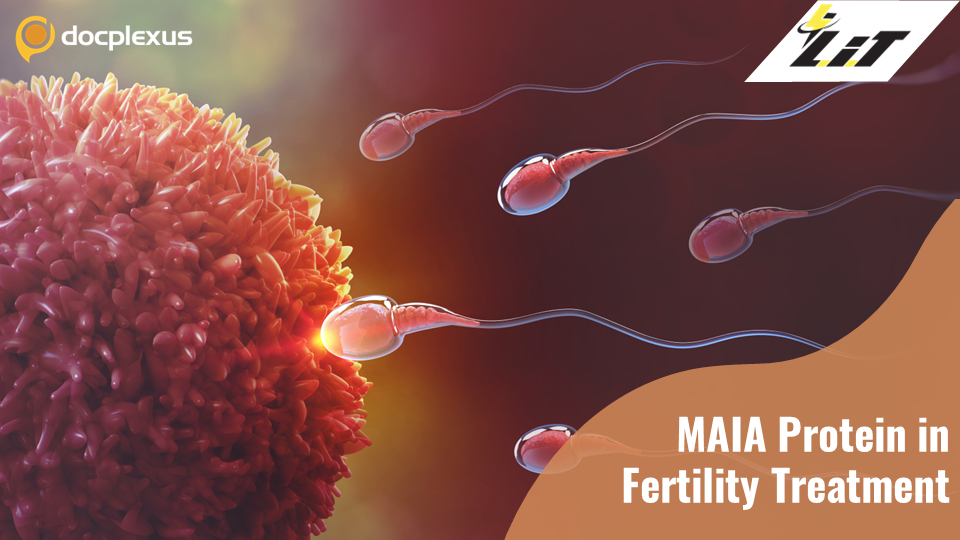
Unexplained infertility is a significant public health concern. Some management approaches to overcome infertility include intrauterine insemination, in vitro fertilization, and surgeries to restore fertility . However, since gamete fusion is a critical event of mammalian fertilization, several challenges are faced during artificial fertilization. To support the successful fertilization of gametes artificially, an international team of researchers led by the University of Sheffield has discovered a new protein called MAIA, which helps sperms fuse to an egg.
This was the first-of-its-kind study where artificial eggs were created using thousands of beads carrying different peptides on their surface for sperm binding. The study has been published in Science Advances. It was observed that sperms successfully bound to all the beads carrying the MAIA protein. When MAIA was inserted into human…