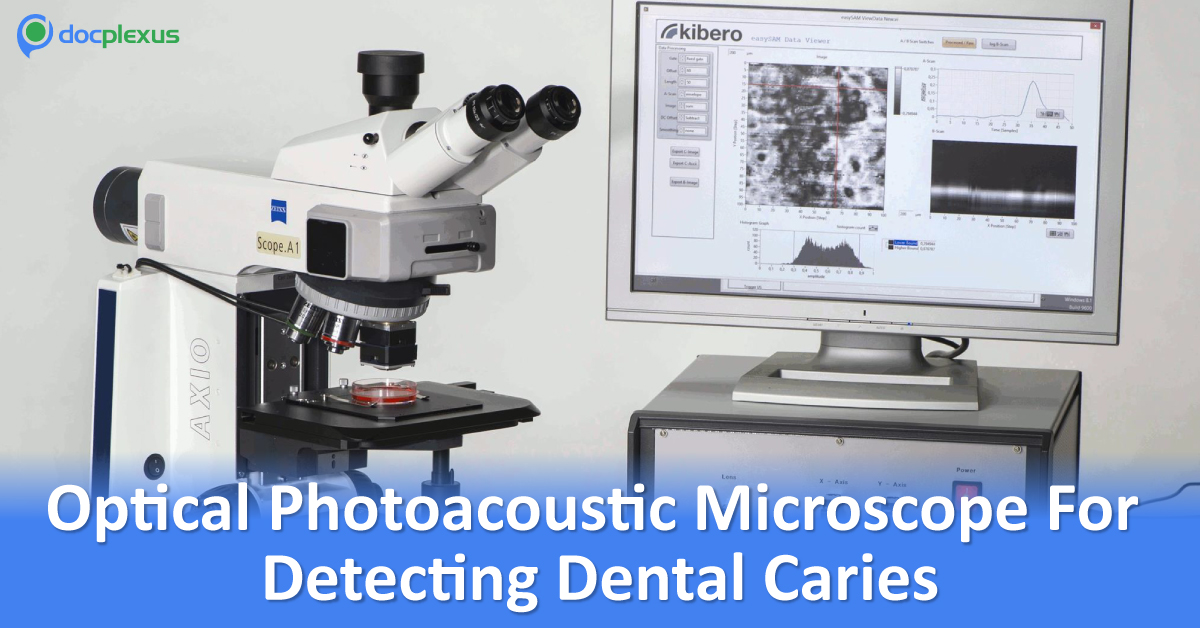
Tooth decay, at its earliest stages, manifests itself as small, white, sub surface lesions in the enamel. Current methods for detection in the dental clinic are visual and tactile investigations along with the radiographs. These techniques suffer from poor sensitivity and specificity at the earliest (and reversible) stages of the disease due to the small size. The optical photoacoustic microscope provides a non-contact method for early detection of white-spot lesions with a high detection bandwidth that offers advantages over previously demonstrated ultrasound methods. Dental caries remains as one of the most common oral diseases in the world.
At the early stages of the disease, caries manifests as small. If undiagnosed, the lesion grows in size, spreading through the dentin layer. A cavity occurs when the lesion’s surface is disrupted. Several ultrasonic dental imaging methods have…