
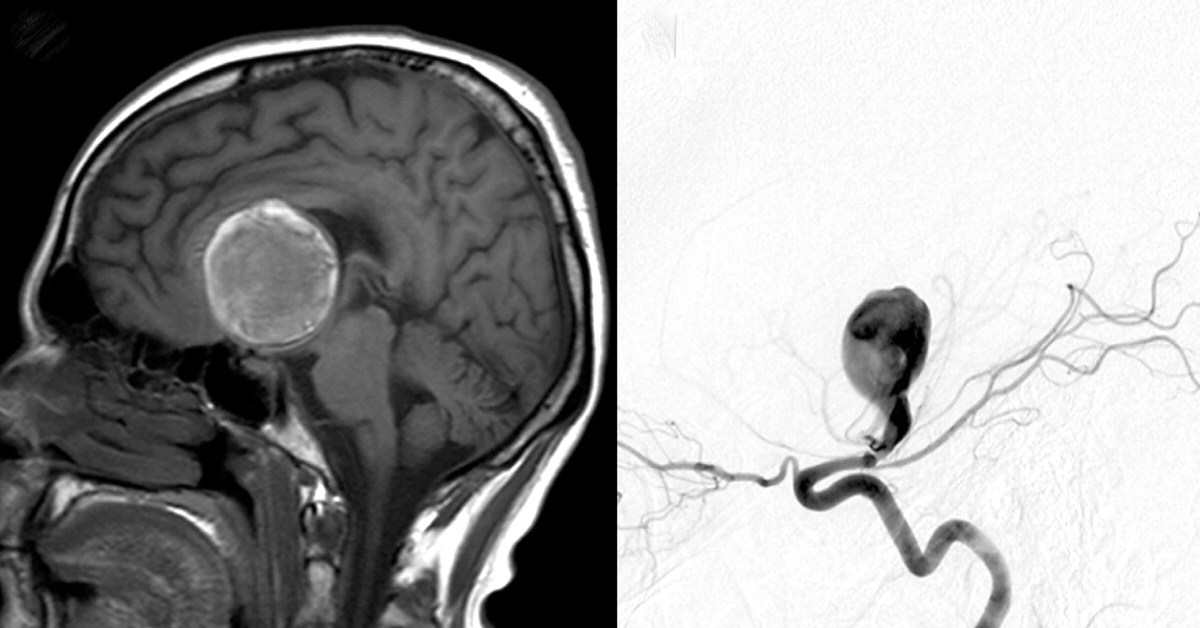
Unruptured intracranial aneurysms (UIAs) are relatively common with a prevalence of approximately 4% in the general population. They are being discovered incidentally with an increasing frequency because of the widespread use of high-resolution magnetic resonance imaging (MRI) scanning. Aneurysms of the cerebral vasculature are relatively common. When an intracranial aneurysm ruptures, it may bleed into the brain parenchyma resulting in a parenchymal hemorrhage, or more often, it will bleed into the subarachnoid space, resulting in a subarachnoid hemorrhage (SAH).
Permanent disability occurs in nearly 50% of the survivors, thus, only approximately one-third of patients who suffer an SAH have a positive outcome. Risk factors There are many risk factors for the development of intracranial aneurysms, both inherited and acquired. Females are more prone to aneurysm rupture, with SAH 1.6…