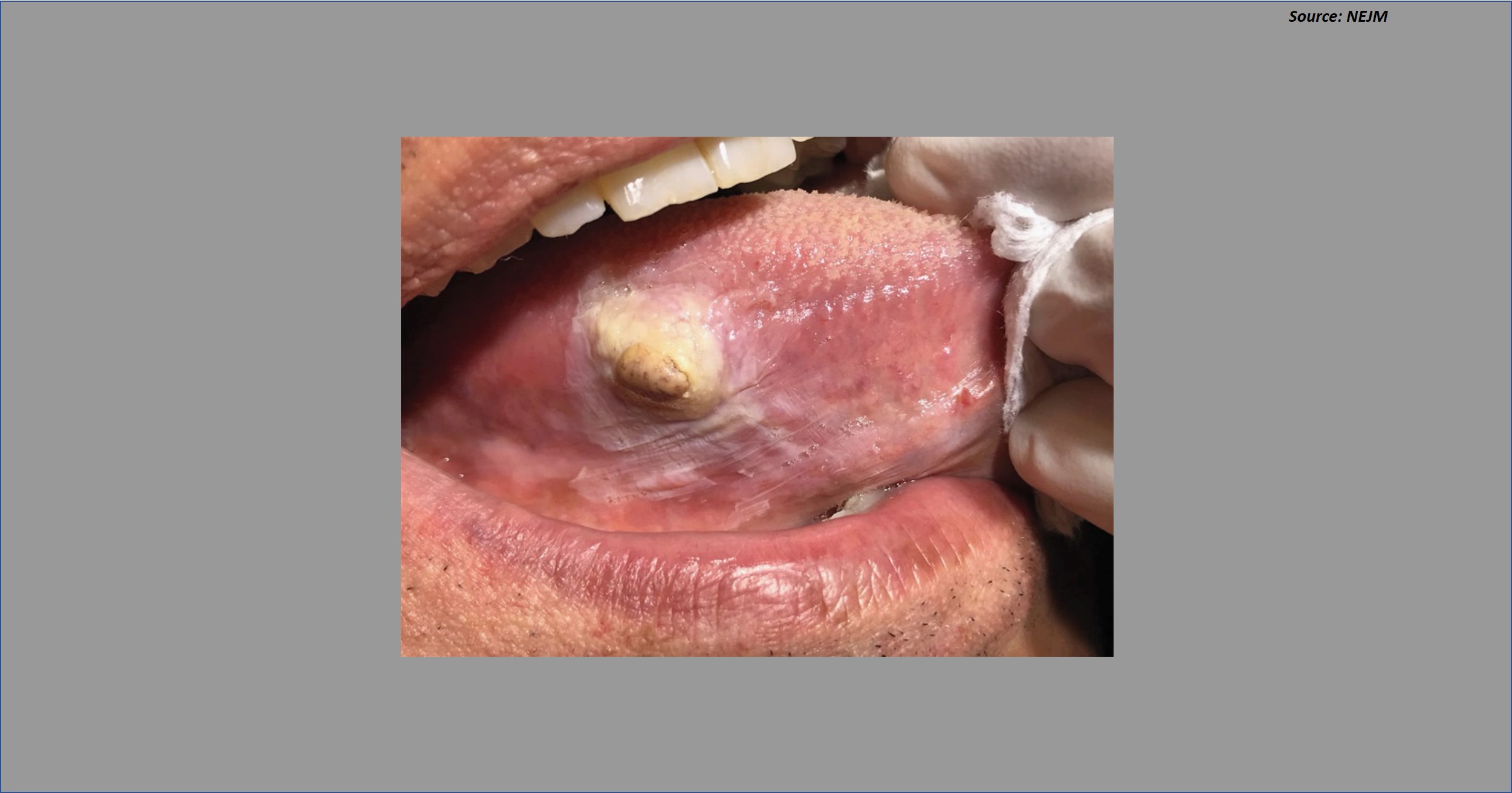
A 60-year-old man comes to your clinic with a complaint of gradually increasing lump in his right groin, which he suspects to be a hernia . The patient reported that the lump has been progressively increasing for six months . However, it was painless and therefore he had ignored it so far. You notice a large inguinal lymph node . The patient had a history of recurrent urethritis . Upon further examination, you found that the patient also has splenomegaly (7 cm below the costal margin) without hepatomegaly.
Laboratory tests The patient’s hemoglobin was low (118g/l) . However, his differential and white-cell count were normal . The patient's lactate dehydrogenase was found too high. Additionally, his erythrocyte sedimentation rate (ESR) was found out to be 58 mm/h . The patient had reduced serum immunoglobins with IgA 0.3g/l (Normal range [NR] 0.8-5.0g/l]; IgG was 5.2g/l (NR 7.2-19.0g/l)…