
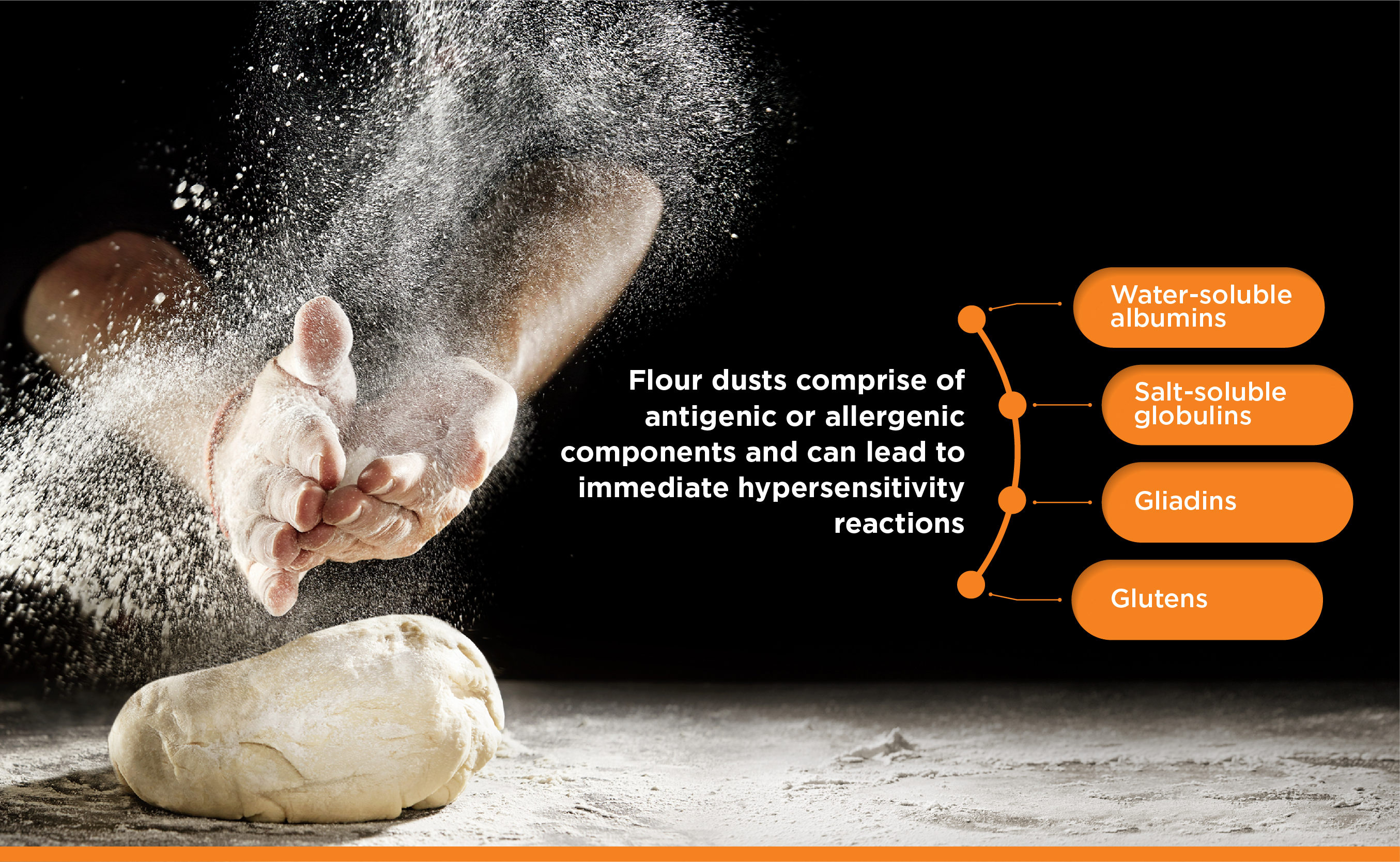
Chronic exposure to organic dust has been seen to have deleterious effects on respiratory symptoms and functions. 1 According to the American Conference of Governmental Industrial Hygienists, a threshold limit of 0.5 mg/m 3 of flour dust was proposed as the occupational exposure level in breathing zones for workers across a range of food industries, including grain mills, flour mills, and bakeries. 2 Wheat flour, a complex organic dust, with diverse antigenic or allergenic components consists of water-soluble albumins, salt-soluble globulins, gliadins, and glutens, of which, albumins and globulins mainly contribute to immediate hypersensitivity reactions to wheat proteins.
2 Immunological responses to flour exposure characterized by elevation of serum IgE, IgG, and IgA antibodies have been reported in bakers and mill workers. 3 Occupational asthma is common among bakers and millers, as…