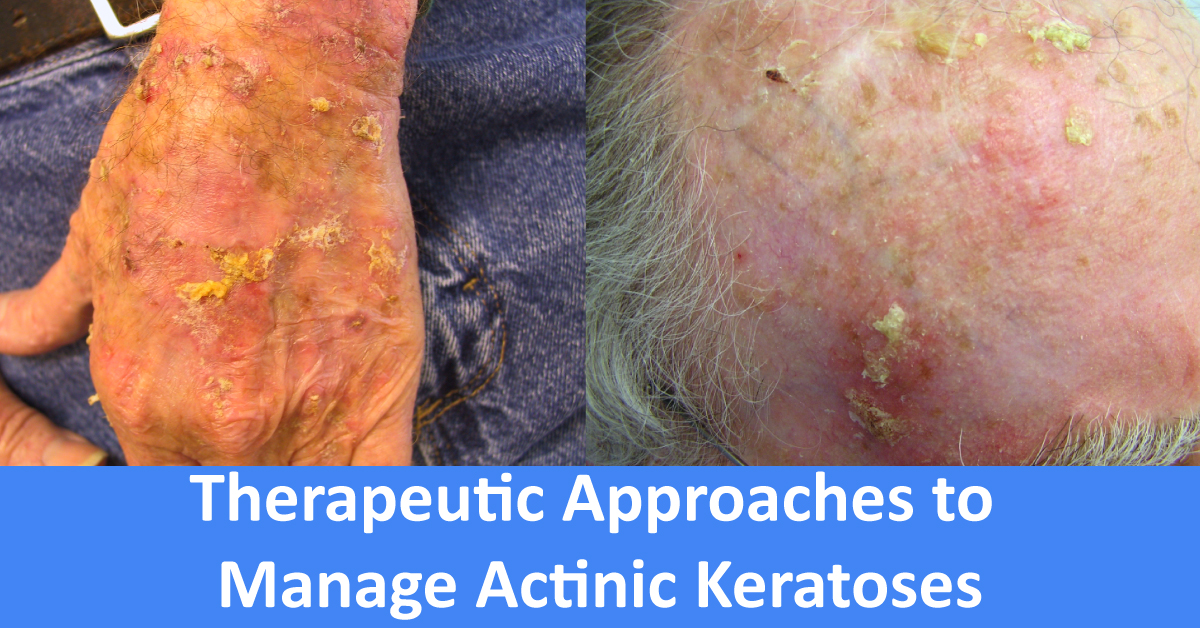
Actinic keratoses (AKs) are common skin lesions that pose an increased risk of developing squamous cell carcinoma (SCC) and other skin malignancies. These arise principally due to excessive ultraviolet (UV) exposure. The treatment for AKs is variable. This article outlines the best available therapies for AKs in light of current understanding of pathophysiology.
Actinic keratoses are clinically erythematous scaly plaques that occur on the sun-damaged skin due to exposure to UV radiation. AKs may regress spontaneously, remain stable or transform to invasive SCC. The main mechanisms of AK formation are inflammation, oxidative stress, immunosuppression, impaired apoptosis, mutagenesis, dysregulation of cell growth and proliferation, and tissue remodeling. Pathophysiology Actinic keratoses are predominantly found in fair-skinned individuals, and increasingly, are due to a problem of the…