
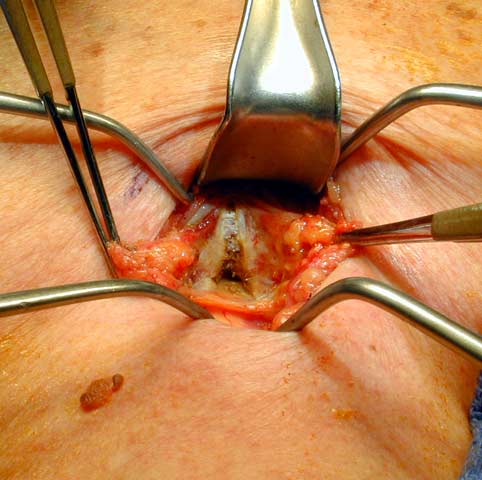
Myasthenia gravis is an autoimmune disease characterized by muscular weakness and fatigability. With medical and surgical management, death is uncommon and most patients lead productive lives. Thymectomy plays a central role in the treatment of myasthenia gravis. This article summarizes the pathophysiology of myasthenia gravis, along with surgical approaches. Thymectomy is a valuable treatment modality for selected patients with generalised myasthenia gravis.
Total removal of the thymus gland is essential. Surgeons that advocate thymectomy through small, cosmetically favourable, incisions usually believe that simple removal of the thymus gland is an adequate operation. Some surgeons emphasise the importance of removing extrathymic tissue, in addition to the thymus gland and usually favour a median sternotomy. To minimise operative morbidity, surgery for myasthenia gravis requires a…