
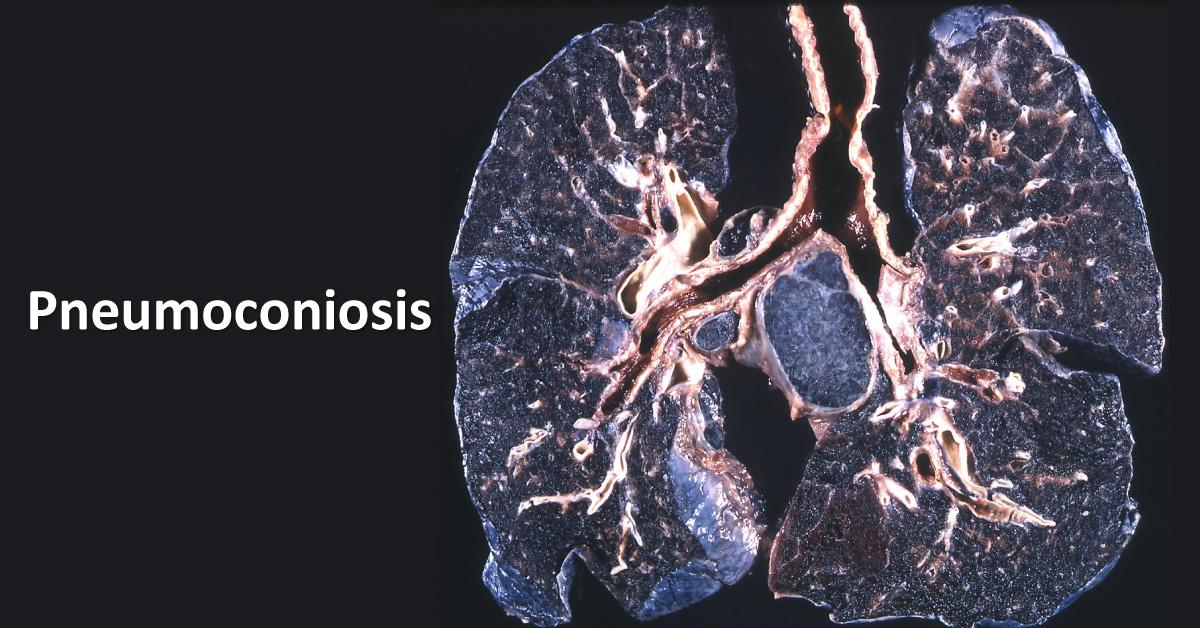
Pneumoconiosis has an annual mortality rate (per 100,000 people) of 15.3% in India. It is defined as a group of interstitial lung diseases caused by the inhalation of certain dust and the lung tissue’s reaction to the dust. The principal cause of the pneumoconiosis is work-place exposure. The current article provides a brief overview on Pneumoconiosis- types, pathophysiology, diagnosis, and management .
Pneumoconiosis refers to wide range of diseases that are caused by the inhalation various organic and non-organic dust particles which are then retained in the lungs. As the main cause of pneumoconiosis is the workplace exposure, it is also called an occupational lung disease. Types of pneumoconiosis The main types of pneumoconiosis are asbestosis, silicosis, and coal workers’ pneumoconiosis (also called as CWP or black lung). As their name suggests, they are caused by inhalation of…