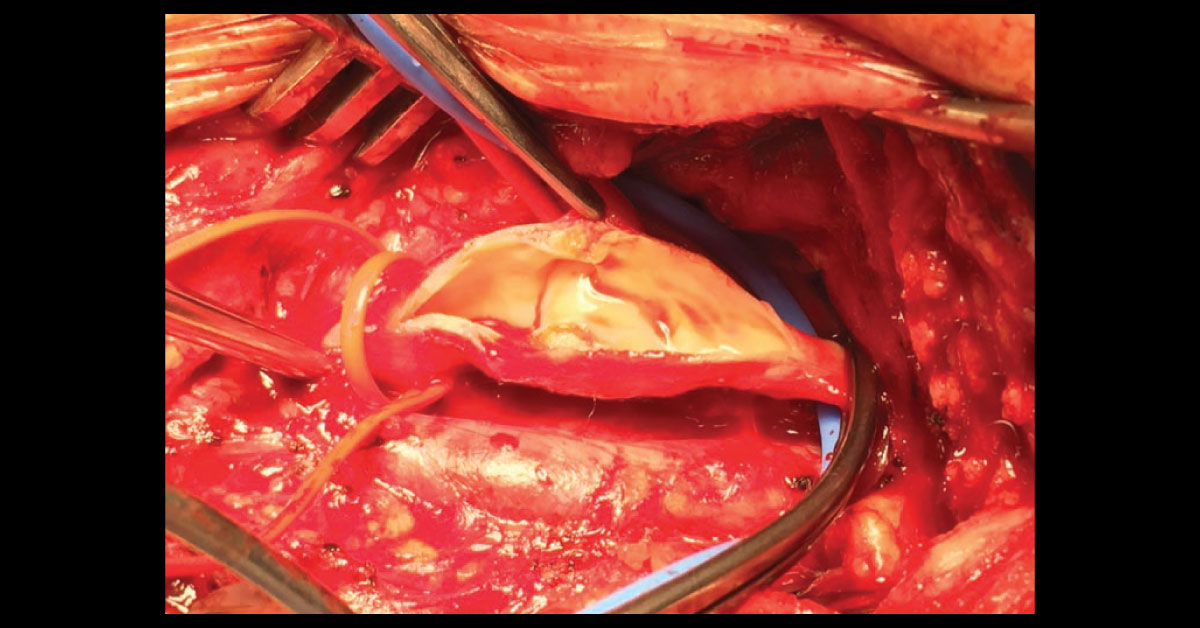
Asymptomatic stenosis of the extracranial carotid arteries may be identified incidentally through imaging – for example, before cardiac surgery. Patients with carotid stenosis are at an increased risk of transient ischaemic attack (TIA) or stroke; but the risk is lower compared with patients with symptomatic stenosis. Good medical control of cardiovascular risk factors is essential. Severe asymptomatic stenoses are sometimes treated by carotid endarterectomy.
Carotid stenting is carried out with the patient under local anaesthesia using a percutaneous transfemoral approach. A guidewire is passed into the carotid artery, commonly with a cerebral protection device at its tip, which is designed to prevent any debris from passing into the cerebral circulation during the procedure. The carotid stenosis is then usually pre-dilated using a balloon catheter. A metal mesh (stent) is inserted to…