
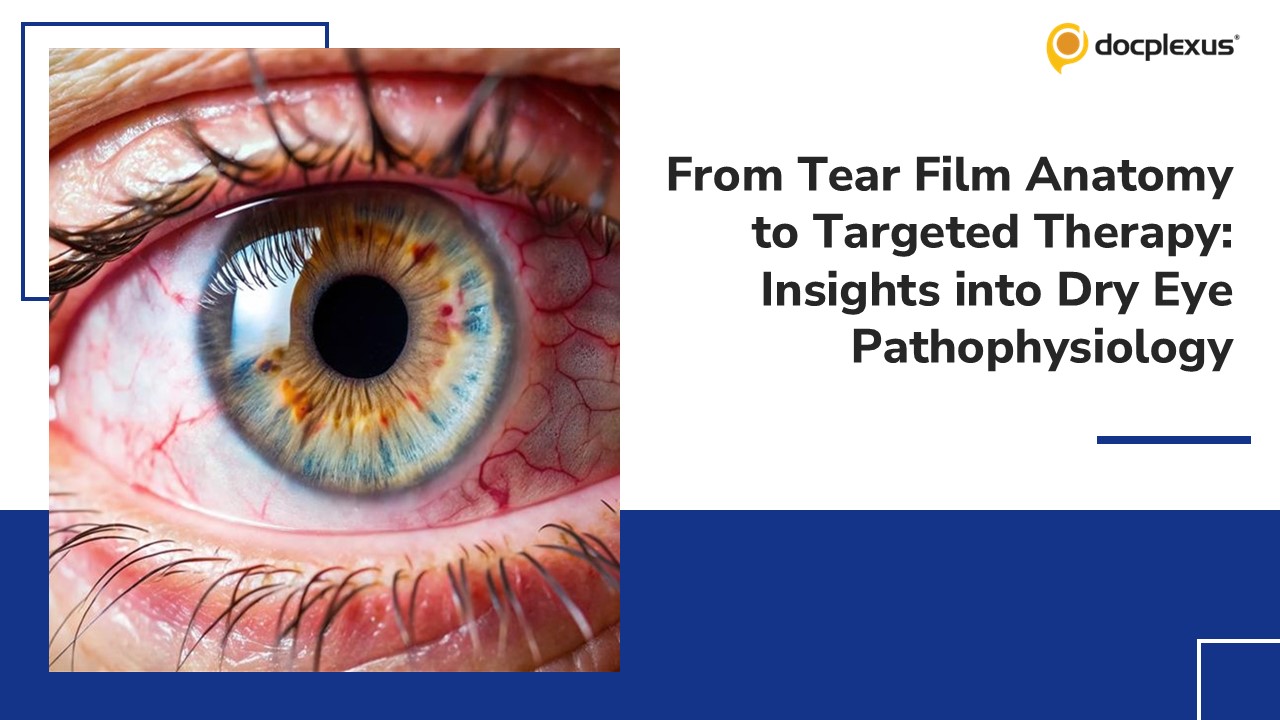
Highlights The tear film is a dynamic trilaminar system —mucin, aqueous, and lipid layers—each critical for ocular surface health 1 Disruption in any layer leads to hyperosmolarity, inflammation, and tear film instability characteristic of Dry Eye Disease (DED) 1 Lipid layer thickness (LLT) strongly predicts tear stability and symptom severity 2 Modern aqueous–lipid hybrid formulations combining hydroxypropyl guar, PEG 400, propylene glycol, and phospholipids restore all tear film layers 3 Treating DED requires “ tear-film-oriented therapy ” addressing both aqueous and evaporative deficiencies 2 Introduction: The tear film forms the first line of defence and optical interface of the eye, maintaining corneal transparency, lubrication, and antimicrobial protection. 1 It is a complex, multilayered structure that dynamically interacts with the ocular surface and environment.
Disruption of…


