
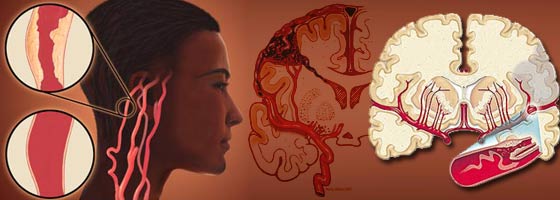
What is intracranial artery atherosclerosis? Intracranial atherosclerosis is deposition of cholesterol and lipids in the wall of the arteries inside the brain. Similar to carotid stenosis in the neck, it is caused by a buildup of plaque in the inner wall of the blood vessels. This narrowing of the blood vessels causes decreased blood flow to the area of the brain that the affected vessels supply. There are three ways in which intracranial artery atherosclerosis can result in a stroke: Plaque can grow larger and larger, severely narrowing the artery and reducing blood flow to the brain.
Plaque can eventually completely block (occlude) the artery. Plaque can roughen and deform the artery wall, causing blood clots to form and blocking blood flow to the brain. Plaque can rupture and break away, traveling downstream to lodge in a smaller artery and blocking blood flow to the brain. What are…