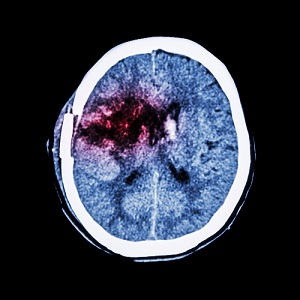
Though the hemorrhagic stroke is relatively less common in children compared to adults, it still remains a significant contributor in childhood death and lifelong disability. Hemorrhagic stroke accounts for about half the number of all childhood strokes and plays a notable role in childhood morbidity and mortality. This article outlines the management strategies for hemorrhagic stroke occurring in children. To outline a successful management strategy for the hemorrhagic stroke in children, it first must be well-differentiated from the other types of acute cerebrovascular events. The following conditions can mimic as a stroke in children: Migraine syndrome.
Post-ictal paralysis (Todd’s). Brain tumors. Encephalopathy, especially the posterior reversible encephalopathy syndrome (PRES). Infections such as abscesses, encephalitis, and meningitis. Multiple sclerosis, acute disseminated…