
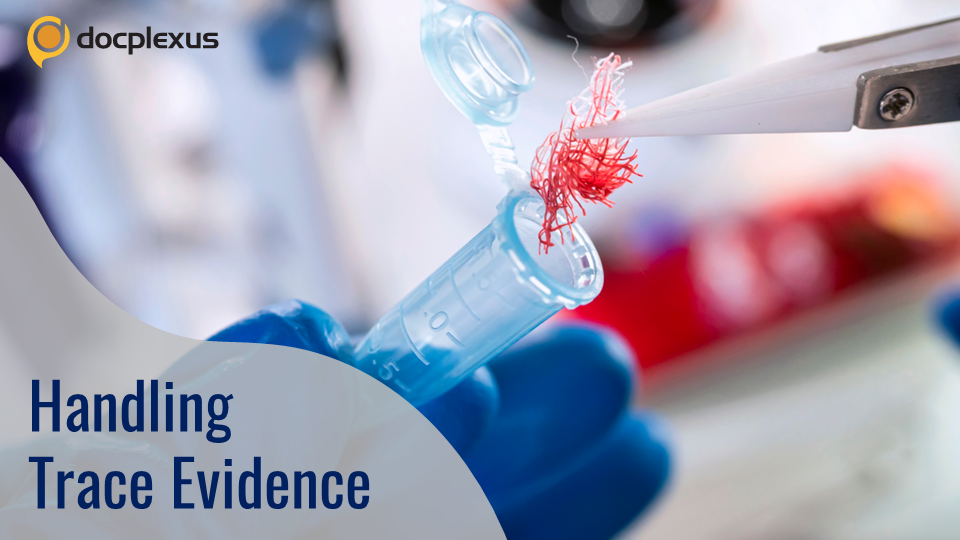
A clinician is often the first contact person in a medicolegal patient examination, collection, and preservation of samples of medicolegal importance. However, doctors often lack the required knowledge and equipment. A clinician has dual responsibilities: Treat the patient and support the judiciary system by timely and efficient handling of the trace evidence. Moreover, failure to collect such evidence is a punishable offense as per Sec. 201, IPC.
We have summarized all the necessary details on this subject in the following infographic. Trace evidence Trace evidence comprises the small, minute, or microscopic exchanged particles in the interaction of objects or people while a crime is committed. Commonly encountered trace evidence includes hair, fibers, skin tags, blood stains, salivary stains, seminal stains, and paints. As they easily transfer from person to person or place to…


