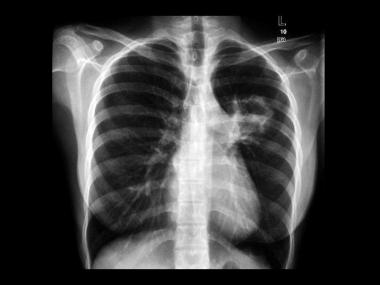
Clinicians are well trained to diagnose various respiratory diseases by recognizing abnormal patterns of diffuse parenchymal lung diseases on conventional radiographs. However, the anomalies of the upper respiratory tract are often overlooked, which are found to be associated with various conditions including acute respiratory failure. This article provides how such anomalies can be spotted and used to diagnose various conditions. The trachea a critical organ that extends from the lower border of the larynx to the carina, where it bifurcates into the mainstem bronchi.
The average length of the trachea is about 10-12 cm in adults and shows normal angel of tracheal bifurcation of about 70±20 degrees. The trachea comprises of four layers: an inner mucosal layer, a submucosal layer, cartilage, and muscle as well as an outer adventitia. It is reinforced anteriorly and laterally by 18 to 22…