
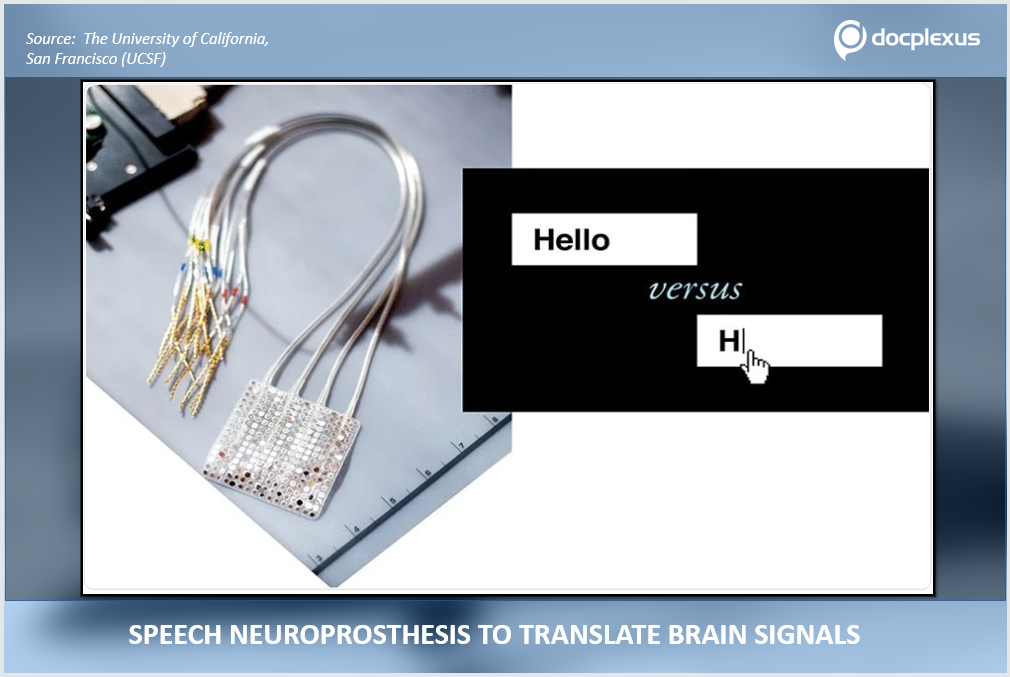
Scientists at UC San Francisco have developed a deep learning-based neuroprosthetic device that helps patients with a disability due to paralysis to articulate speech and speak by translating brain signals into words. Speech-loss due to stroke affects thousands of patients every year, debilitating their quality of life. The novel research published in The New England Journal of Medicine aims to restore the ability to communicate in patients with anarthria, i.e., loss of articulate speech, and spastic quadriparesis, after a brain stem paralysis.
This was made possible by directly decoding words and sentences from patterns of cerebral cortical activity. The team of scientists targeted the sensorimotor area (that controls speech by sending signals to the muscles in the larynx) to implant a subdural, high-density, multielectrode array in a stroke patient. The participant was instructed to…