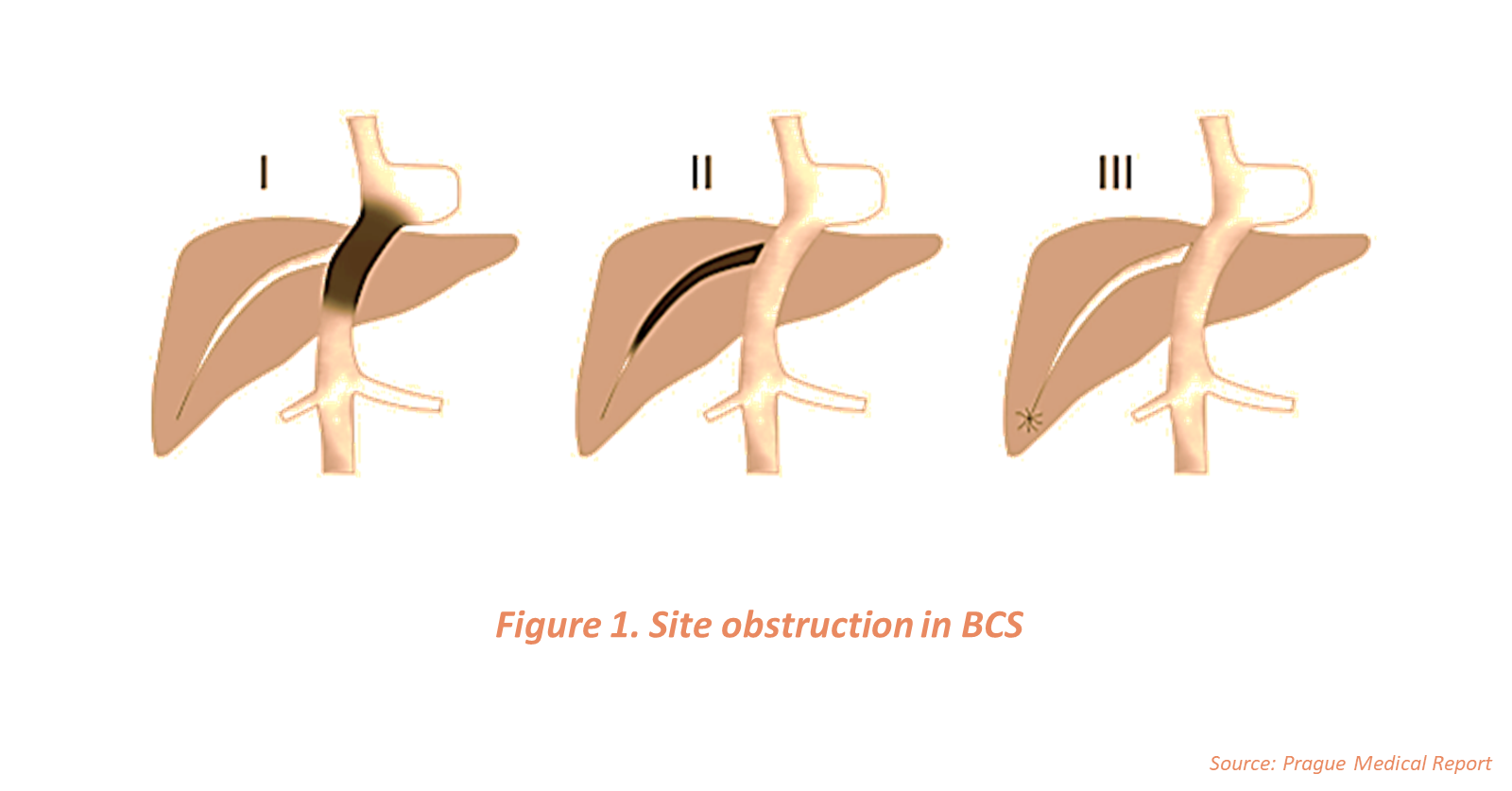
Introduction Budd-Chiari syndrome (BCS) is a life-threatening, rare hepatic disorder characterized by the narrowing and occlusion of the hepatic veins resulting in blockage in small or large veins that carry blood from the liver to the inferior vena cava. In addition, blood clots may entirely or partially block blood flow from the liver. This syndrome may appear gradually or suddenly. It is also known as Budd's syndrome, Chiari-Budd syndrome, Chiari's disease, Hepatic Veno-occlusive disease, and Rokitansky's disease.
1 Epidemiology The incidence reported varies from 0.2 to 4.1 case/million/year, with an estimated prevalence of 2.4–7.7/million in Asia and 1.4–4.0/million in Western countries. Males were more likely affected (52–69%) in Western countries, while females were more likely affected (48–70%) in Asian countries 2 . Classification Classification of BCS according to the severity…