
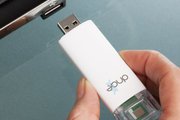
The technology could be particularly powerful in remote regions like Sub-Saharan Africa, which may not have easy access to testing facilities. Finding out quickly if a patient, particularly a baby, is infected with the virus is crucial to their long term health and survival. The device, which uses a mobile phone chip, just needs small sample of blood. This is placed onto a spot on the USB stick. If any HIV virus is present in the sample, this triggers a change in acidity which the chip transforms into an electrical signal.
This is sent to the USB stick, which produces the result in a programme on a computer or electronic device. In the latest research, the technology tested 991 blood samples with 95 per cent accuracy. The average time to produce a result was 20.8 minutes. The device, created by scientists at Imperial College London and DNA Electronics, uses a drop of blood to detect…