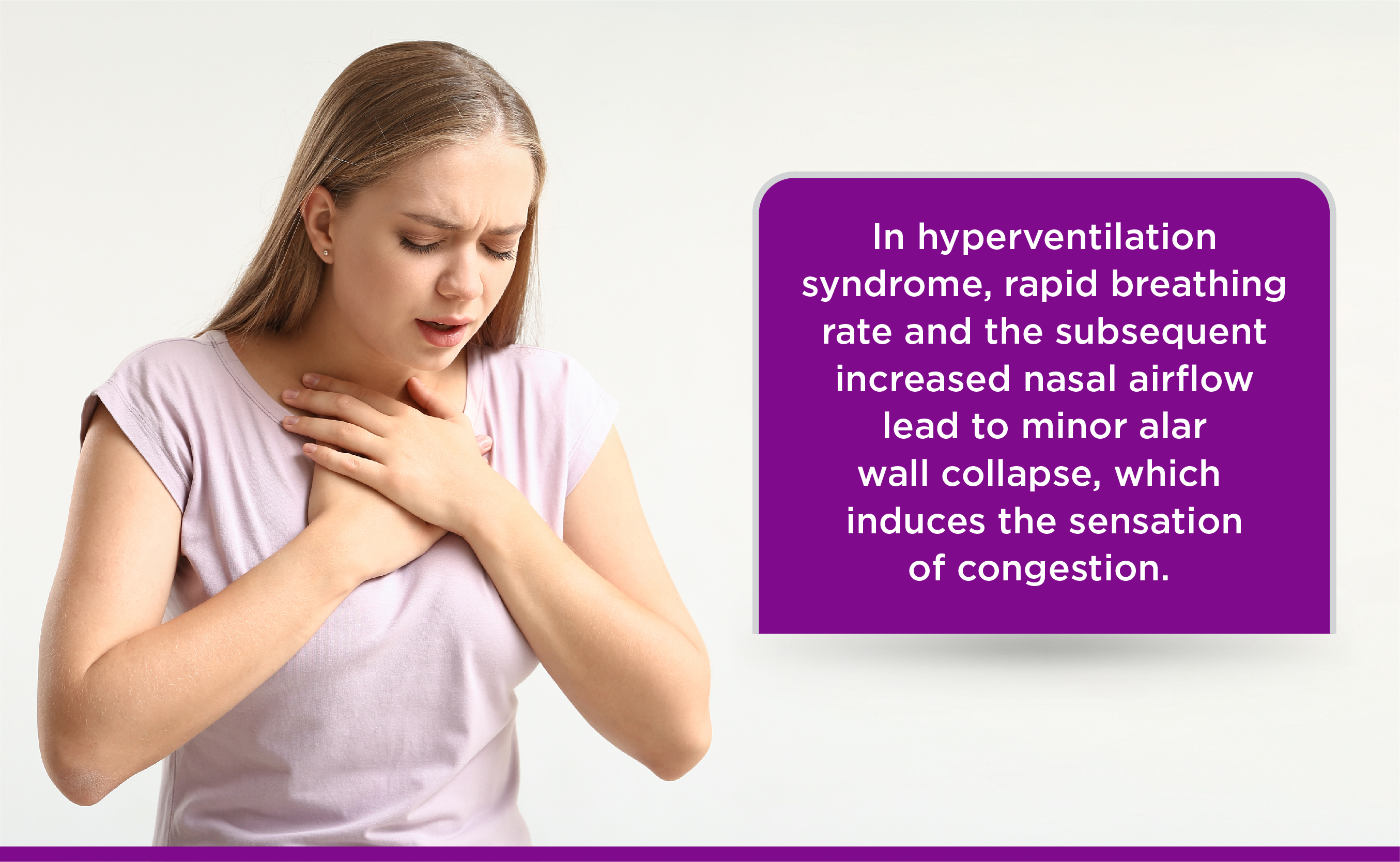
Nasal congestion is characterized by the inability to adequately breathe through the nose. Despite septoplasty and appropriate medical management, some patients are seen to breathe rapidly by predominantly using the upper chests rather than the diaphragms, a breathing pattern associated with hyperventilation syndrome (HVS). 1 In a prospective case series, 14 patients (six women), aged 17–60 years, who complained of nasal congestion, but otherwise appeared to have an adequate nasal airway without evidence of nasal valve collapse post nasal surgery from June 2002 to October 2003, completed a Nijmegen questionnaire for the clinical diagnosis of HVS.
1 This questionnaire consists of 16 complaints related to the various organ systems. The frequency of these complaints is indicated on a 5-point ordinal scale (0=never, 5=very frequently). 2 In the study by Bartley J, et al ., all patients were…