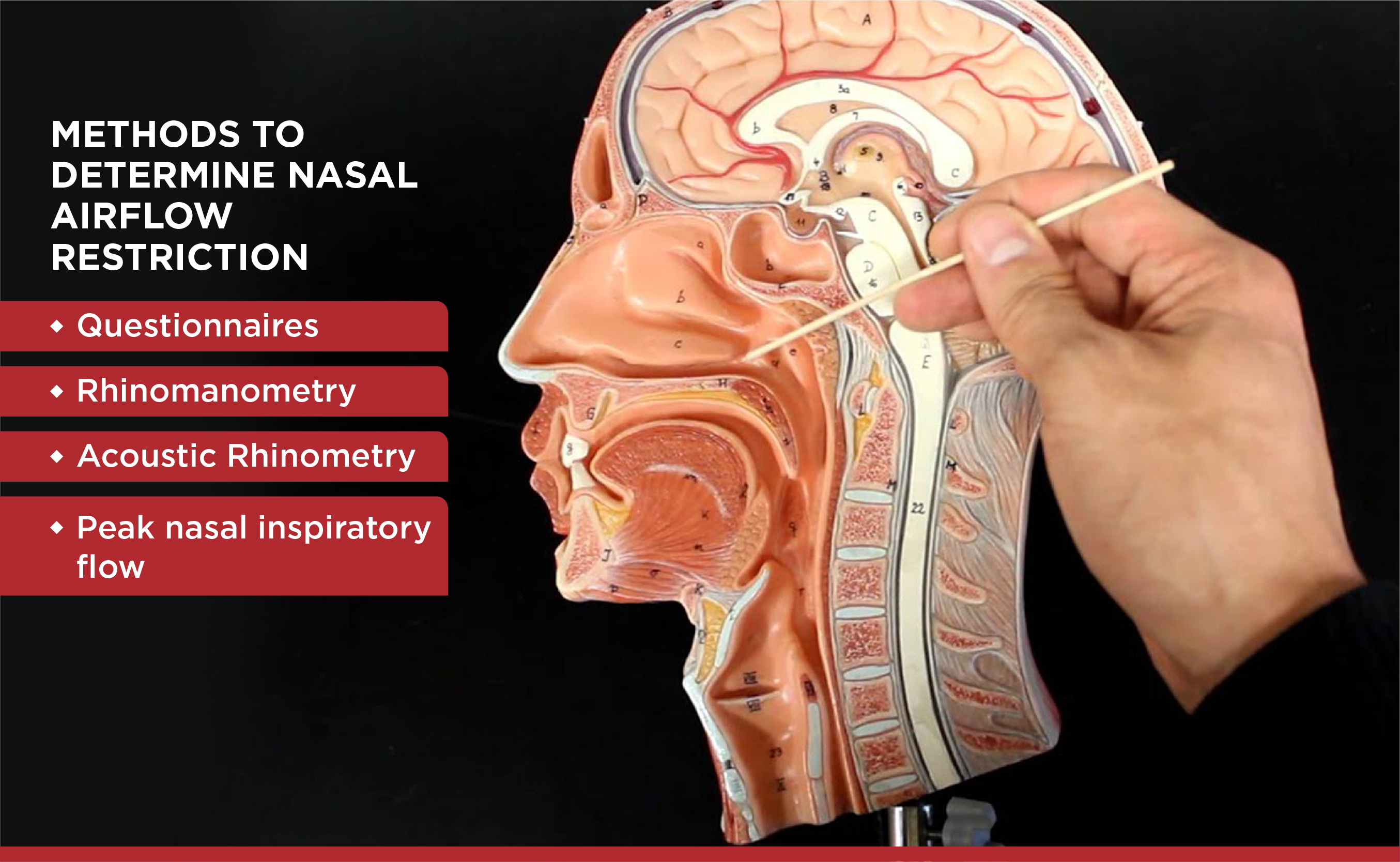
Correlation between subjective sensations of nasal fullness and objective measurements such as airflow resistance (rhinomanometry), nasal wall geometry (acoustic rhinometry), and peak nasal inspiratory flow have been discussed in several studies. The GRADE (Grading of Recommendations Assessment, Development, and Evaluation) system has been used to analyse the medical evidence supporting each of these methods. These results link the outcomes of a patient's pathophysiological processes with their psychometrically calibrated sensation of airflow.
1 The level of subjective fullness of a patient is determined by their personal experiences with nasal distress and irregular airflow, expectations, and vocabulary that precipitate a verbal complaint. This helps patients to decide to use over-the-counter or prescribed treatments. An inadequacy of language to describe visceral, interoceptive…