
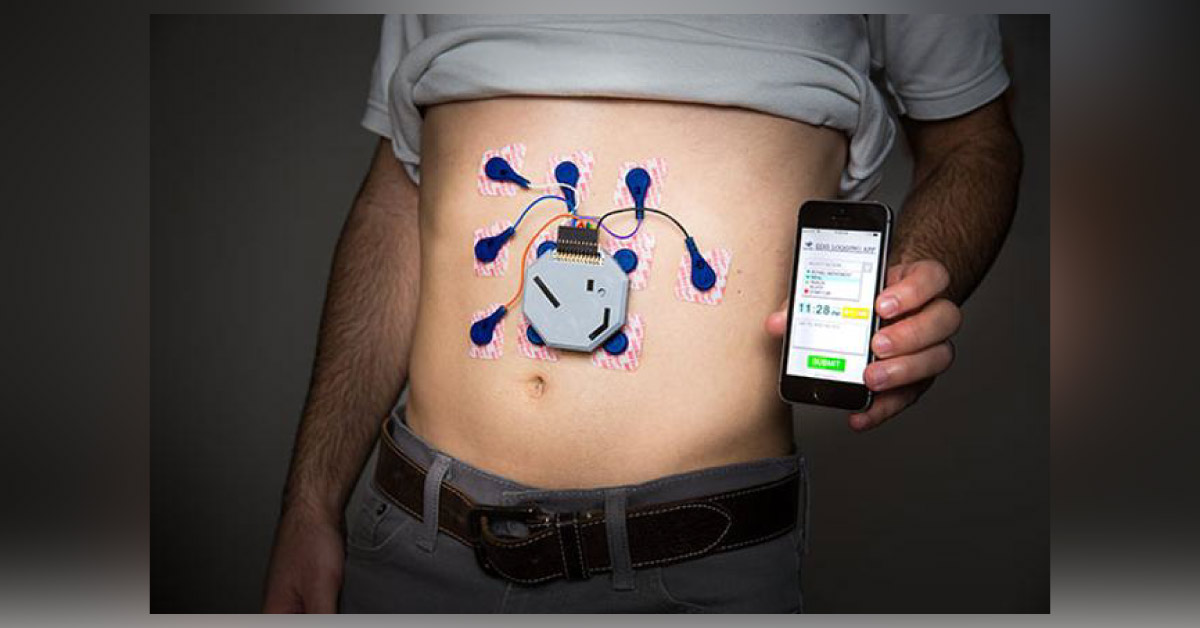
A team of engineers and physicians has developed a wearable, non-invasive system to monitor electrical activity in the stomach over 24 hours—essentially an electrocardiogram but for the gastrointestinal (GI) tract. The team tested the device, a 3D printed portable box connected to 10 small wearable electrodes, on 11 children and 1 adult volunteer. They found that data collected with the wearable system were comparable to data collected in the clinic with state-of-the-art methods, which are invasive--including a catheter inserted through the patient’s nose.
They also found that the stomach’s electrical activity changes not only around meals, but also during sleep, following its own circadian rhythm. “We think our system will spark a new kind of medicine, where a gastroenterologist can quickly see where and when a part of the GI tract is showing abnormal rhythms and as a result make more…