Budd-Chiari syndrome (BCS) is a life-threatening, rare hepatic disorder characterized by the narrowing and occlusion of the hepatic veins, resulting in partial or complete blockages in small or large veins carrying blood from the liver to the inferior vena cava. BCS may appear gradually or suddenly. It is also known as Budd's syndrome, Chiari-Budd syndrome, Chiari's disease, Hepatic Veno-occlusive disease, and Rokitansky's disease. The condition is more common in Asia than in western countries.
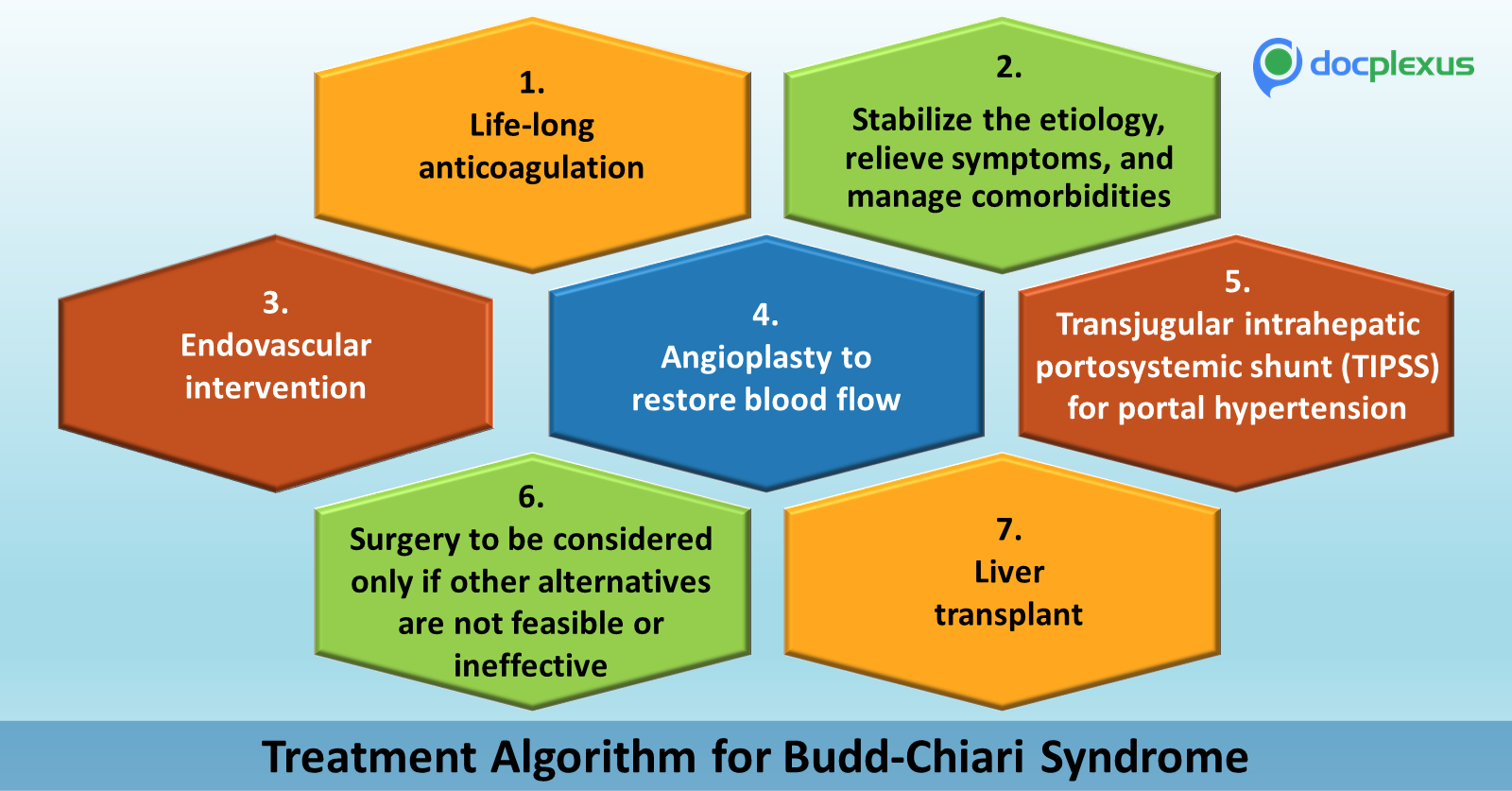
To know the epidemiology, classification, pathophysiology, clinical manifestation, and diagnosis, click here! In this article, we will discuss the treatment strategy of BCS. Management of BCS: Anticoagulation therapy: Individuals with BCS are advised for lifelong anticoagulant therapy. Patients may undergo parenteral anticoagulation therapy using low molecular weight or unfractionated heparin…