
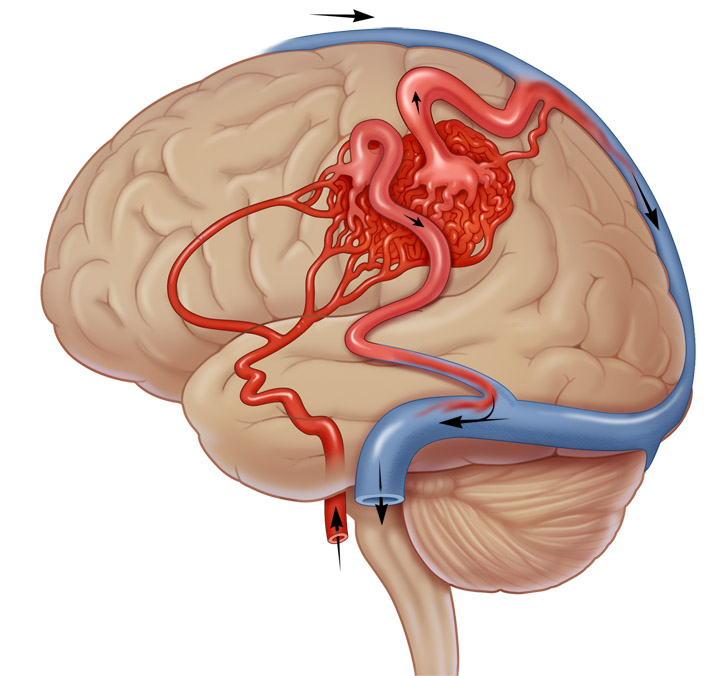
What is a Brain AVM? An AVM (arteriovenous malformation) of the brain is an abnormal tangle of blood vessels in the brain connecting the arteries to the veins. The tangle of abnormal blood vessels is called a 'nidus'. If the arteries and veins are connected one-to-one without the intervening tangle of blood vessels, it is called a fistula. Because these blood vessels are abnormal, they have a tendency to rupture leading to bleeding within the brain. AVMs are not unique to the brain and can occur in other parts of the body. However, brain AVMs are unique in that they cause severe devastating effects if they rupture.
How common are brain AVMs? Brain AVMs are rare. There are no data from India. Across the world, they occur in about 1 in 100,000 population. About 2% of all strokes are caused due to AVMs. About 2/3rds of people who develop AVMs are under 40 years of age. Why do they occur?…