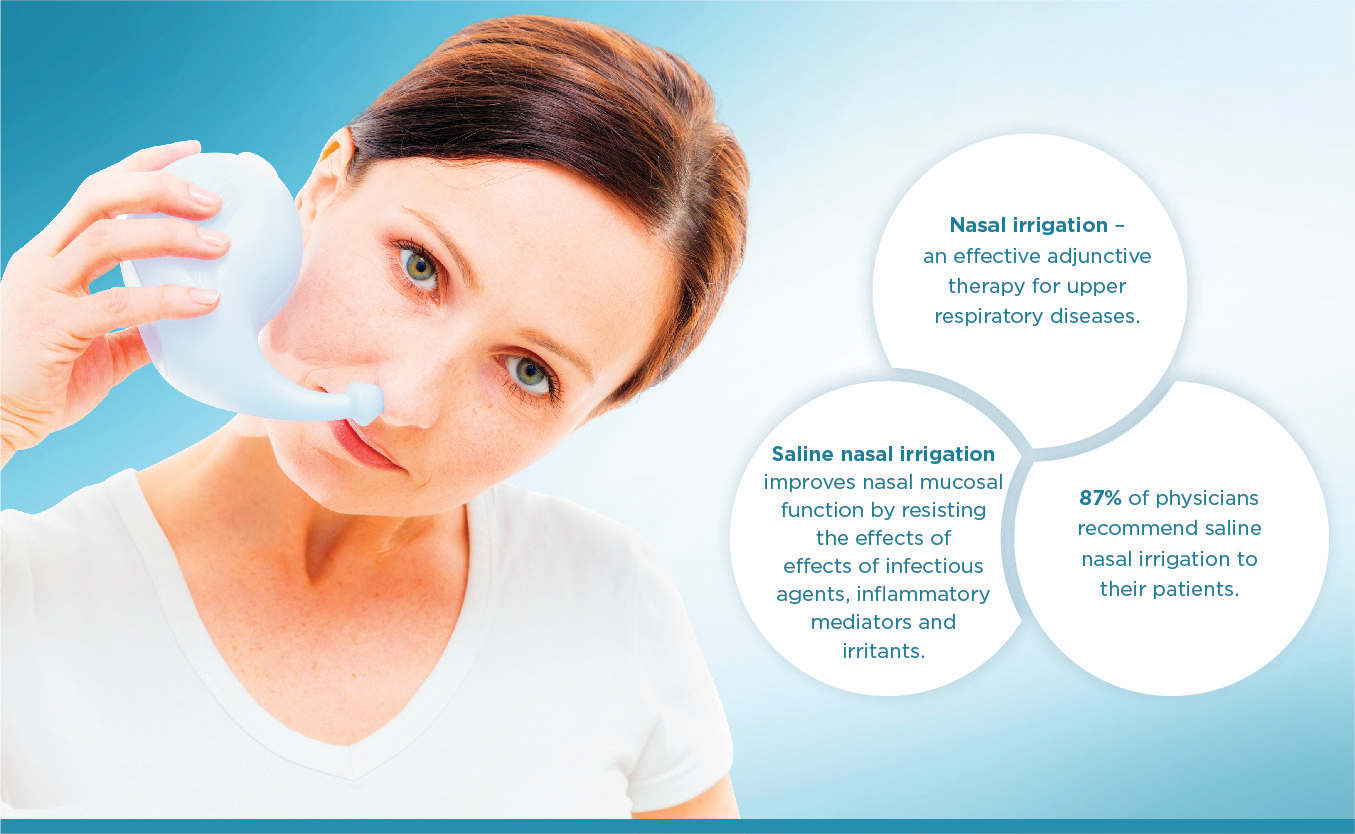
Upper respiratory conditions, including acute and chronic rhinosinusitis, viral upper respiratory tract infection (URTI), and allergic rhinitis, poses a significant burden on the patient. Saline nasal irrigation can be administered as a spray using low positive pressure or with the help of a vessel with nasal spout using gravity-based pressure. 1 Studies have suggested that 87% of physicians recommend nasal saline irrigation to their patients for one or more conditions.
Nasal irrigation enhances the ability of nasal mucosa to resist the effect of infectious agents, inflammatory mediators, and irritants. It improves the function of nasal mucosa via physiological effects like: 1 Direct cleansing via irrigation Removal of inflammatory mediators Improved mucociliary function Patients with chronic rhinosinusitis mostly suffer from nasal congestion or stuffiness, nasal dryness, or thick…