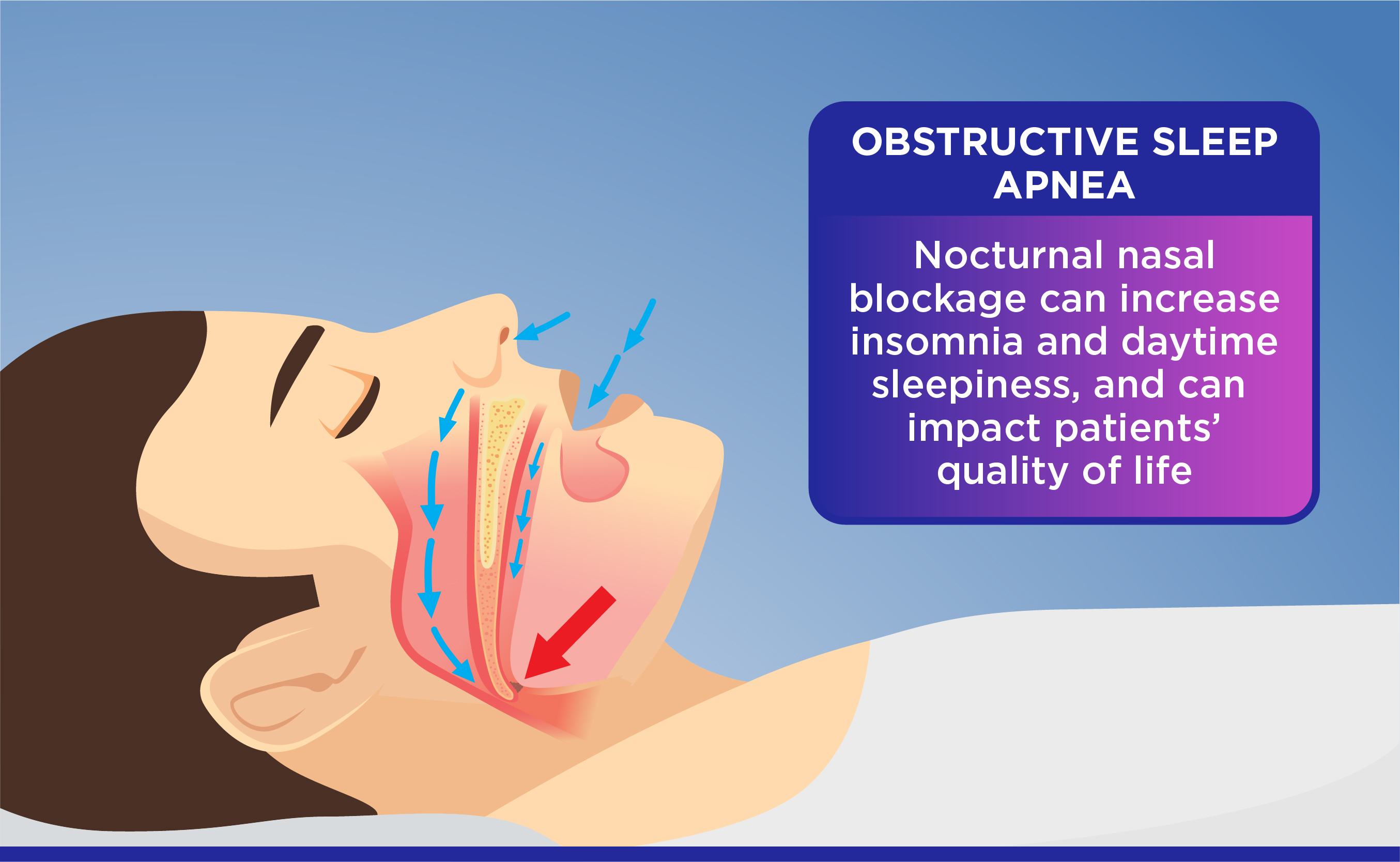
Obstructive Sleep Apnea (OSA) is common, affecting ~ 15% of the general population and ~ 25–50% of middle-aged individuals. OSA can lead to a decreased quality of life,primarily due to impaired quality of sleep. 1 A recent clinical study investigated the frequency of subjective and objective nasal obstruction in patients with untreated sleep apnea and its associations with the quality of life. In total, 810 patients in the Icelandic Sleep Apnea Cohort, including 153 females, aged 54.5 ± 10.6 years, with an apnea/hypopnea index 44.7 ± 20.7/hour were subjected to a type 3 sleep study.
They also completed questionnaires and acoustic rhinometry was used to measure their nasal dimensions. In this study, ~ 35% of the patients reported nocturnal nasal obstruction (≥3 times/week). These patients also had smaller nasal dimensions, as measured by the minimum cross-sectional area within the…