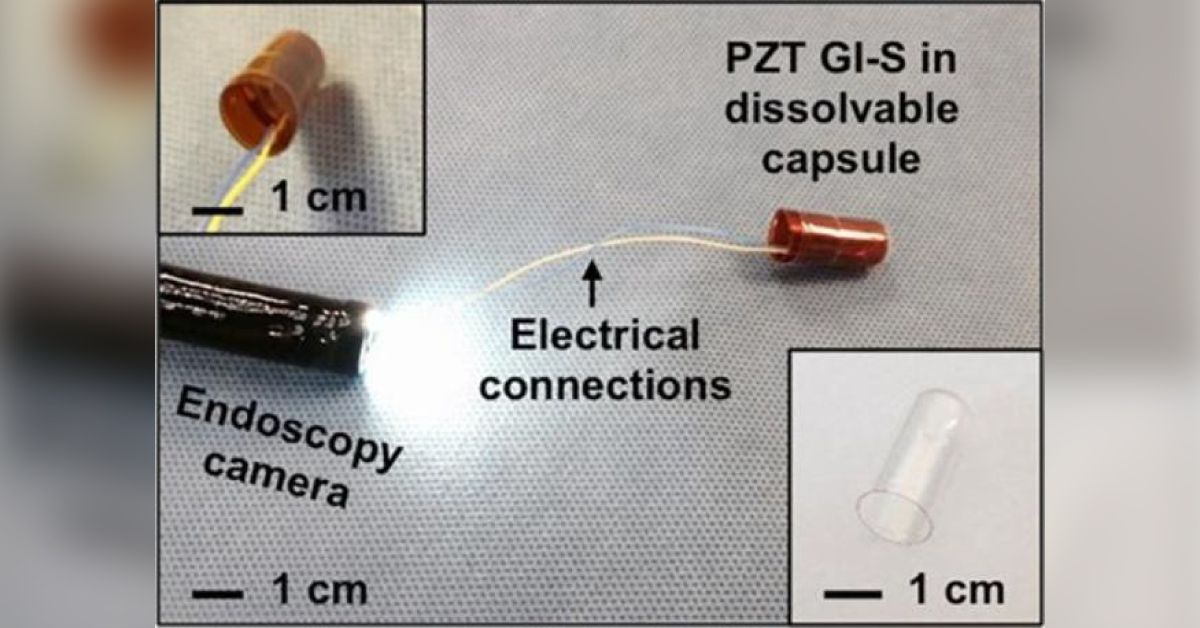
Researchers have built a flexible sensor that can be rolled up and swallowed. Upon ingestion, the sensor adheres to the stomach wall or intestinal lining, where it can measure the rhythmic contractions of the digestive tract. Such sensors could help doctors to diagnose gastrointestinal disorders that slow down the passage of food through the digestive tract. They could also be used to detect food pressing on the stomach, helping doctors to monitor food intake by patients being treated for obesity.
The flexible devices are based on piezoelectric materials, which generate a current and voltage when they are mechanically deformed. They also incorporate polymers with elasticity similar to that of human skin/ mucosa , so that they can conform to the skin / mucosa and stretch when the skin / mucosa stretches. The researchers have previously developed ingestible devices that can be used to…