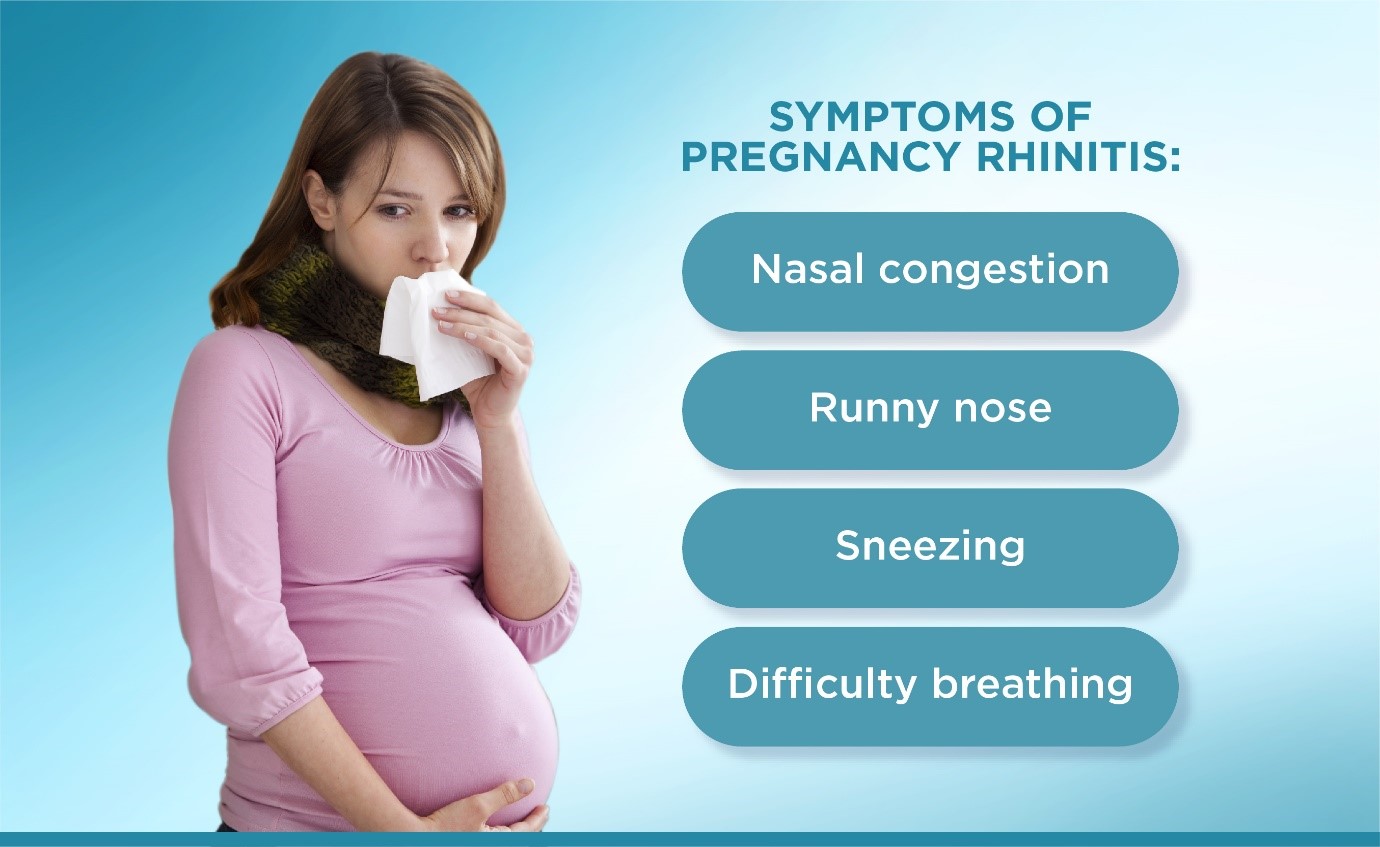
Pregnancy/gestational rhinitis is persistent nasal congestion frequently occurring during the first trimester and late pregnancy in the absence of allergy, infection, or tumor. 1 It is relatively common, affecting approximately 18-30% of pregnant women. 2 It typically lasts for more than six weeks and completely ceases two weeks post-delivery.
2 Although the exact pathophysiology is unknown, hormonal changes associated with pregnancy are thought to influence the etiology of pregnancy rhinitis. 2 During pregnancy, the placental trophoblastic hormone stimulates nasal mucosal hypertrophy, estrogen increases the microvasculature and histamine receptors in nasal epithelial cells, and progesterone raises the circulating blood volume, consequently leading to nasal vasodilation. 2 Risk factors for pregnancy rhinitis include smoking, chronic sinusitis, and chronic exposure to house dust…