
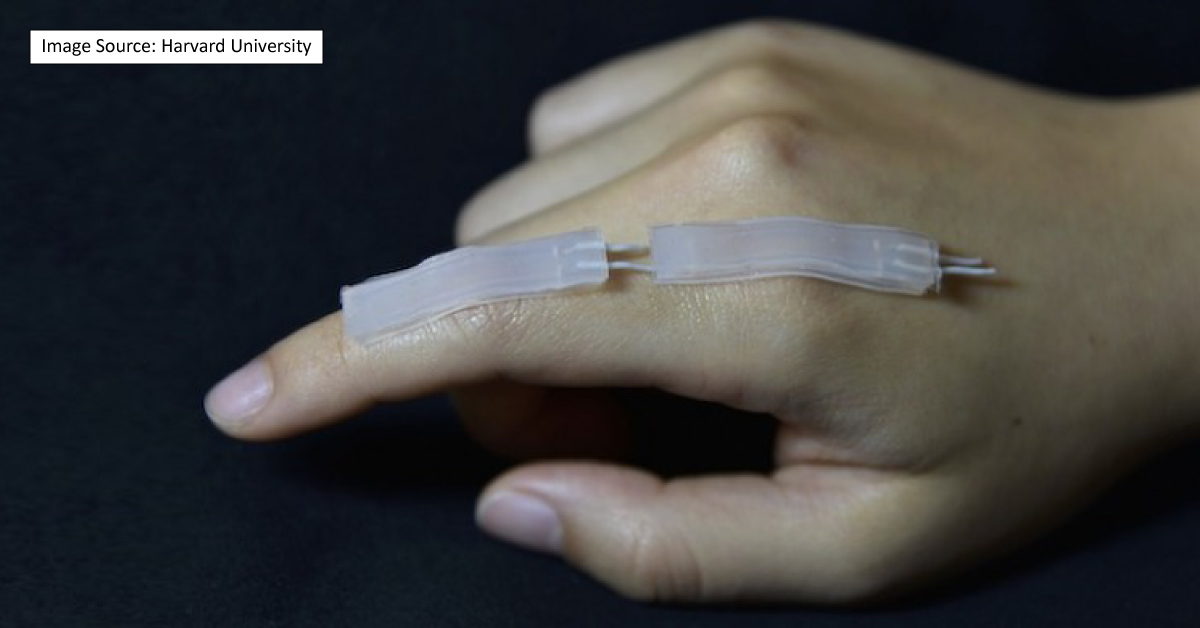
Recently, researchers at Harvard University have developed a soft wearable sensor to assist children suffering from neuromotor and cognitive developmental disabilities since birth. This biocompatible sensor can find potential use in diagnostics, therapeutics, and human-computer interfaces. Early detection of neuromotor and cognitive developmental disabilities in prematurely born children is a challenging issue. However, accurate measurement and recording of the motor functions are very tricky, especially in children.
Furthermore, children have a natural urge for ingesting things and dislike wearing anything bulky on their hands. The sensor developed by the researchers at the Harvard University attaches securely to the hand and can be used to measure the force of a grasp and motion of the hand and fingers. Unlike other sensors, this particular device uses a novel, highly conductive,…